
You wear SPF 50+ religiously. You apply it every single morning. Yet, when you look in the mirror, those stubborn dark spots seem just as prominent or worse, even darker than before.
While sunscreen is your skin’s first line of defense, UV radiation is only one part of this. If your dark spots are getting darker despite sunscreen use, one of the following triggers is usually responsible.
1. Blue light exposure
Standard broad-spectrum sunscreens are formulated to protect against UVA (aging) and UVB (burning) rays. However, they rarely block High Energy Visible (HEV) blue light—the visible light emitted by sunlight, LED bulbs, screens, and smartphones.
Research shows that HEV blue light penetrates deeper into the dermis than UVA rays, directly stimulating melanocytes (pigment-producing cells) to manufacture excess melanin pigment. This is especially true for Fitzpatrick skin types III through VI, where blue light triggers longer-lasting hyperpigmentation than UV rays.
The Fix: Switch to a tinted mineral sunscreen containing iron oxides. Iron oxides form a physical barrier that reflects visible blue light away from the skin.
2. Heat exposure
Whether it’s steam from cooking, hot yoga classes, saunas, or simply sitting in a hot car on a sunny day, heat can trigger pigmentation. In conditions like melasma or post-inflammatory hyperpigmentation (PIH), heat alone is enough to increase your pigmentation.
The Fix: Avoid hot environments if you suffer from hyperpigmentation. Keep cooling mist sprays or cold compresses handy during warmer weather to bring down your skin’s internal temperature quickly. Use a broad spectrum sunscreen with IR (Infra-red) protection.
3. Your Sunscreen Layer Is Too Thin (Or Never Reapplied)
To achieve advertised SPF protection, you need 2 milligrams per square centimeter of skin (roughly two full finger lengths for your face and neck).
Chemical UV filters degrade as they absorb light. If you apply sunscreen at 8:00 AM, its protective barrier is significantly depleted by midday—even if you stay indoors near windows.
The Fix: Measure out two finger lengths of sunscreen for your face. If you work near windows or spend time outdoors, reapply every 2 hours using a liquid sunscreen or a tinted mineral powder touch-up.
4. Unnoticed Friction & Barrier Damage
Are you aggressively rubbing your face with towels? Using harsh face scrubs? Over-using strong exfoliants like glycolic acid or retinol?
Physical friction and compromised skin barrier function trigger pigmentation.
The Fix: Treat hyper pigmented skin with extreme gentleness. Ditch abrasive scrubs, limit active acids/retinol to 2 times per week, and ensure your barrier is supported with ceramides and soothing ingredients like niacinamide or centella asiatica.
5. Underlying Hormonal Fluctuations
If your dark spots present as symmetrical, lace-like patches across your cheeks, forehead, or upper lip, you may be dealing with melasma.
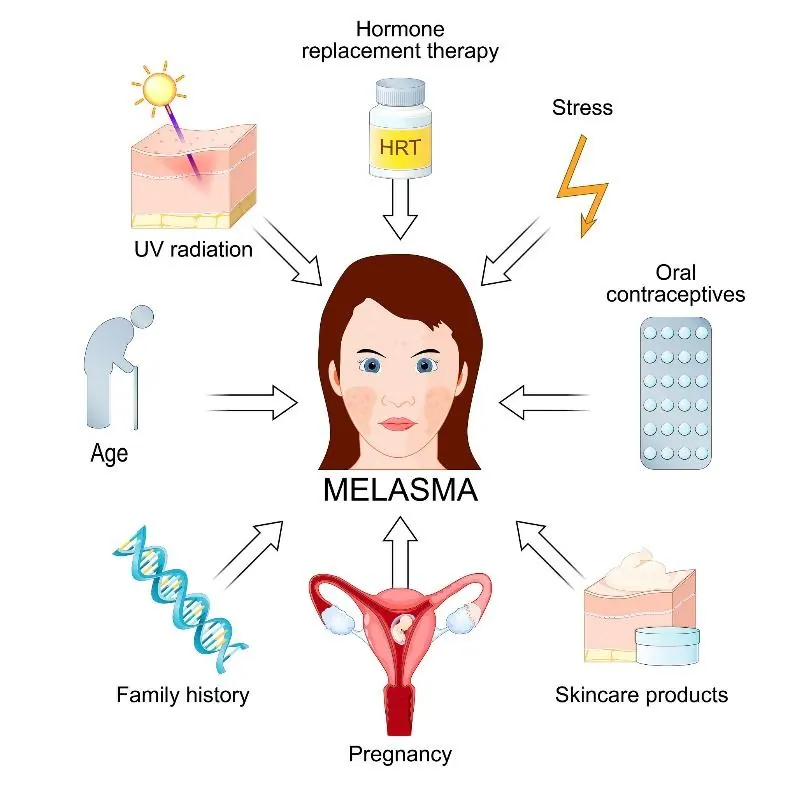
Melasma is heavily driven by estrogen and progesterone. Fluctuations caused by birth control pills, pregnancy, hormone replacement therapy, keep melanocytes (cells producing melanin pigment) hyper-sensitive. Under hormonal influence, even minimal ambient light exposure can trigger pigmentation.
The Fix: Combine strict visible-light protection (iron oxide SPF) with topical pigment inhibitors (such as tranexamic acid, azelaic acid, or alpha arbutin) to control the melanin production.
6. Chronic stress
When you are stressed, your body goes into “fight or flight” mode and floods your bloodstream with stress hormones like cortisol.
Stress Hormones Directly Flip the “On” Switch: Your pigment-producing cells (melanocytes) have receptors that respond directly to stress hormones. When cortisol rises, it signals these cells to start making extra melanin—even if you haven’t been in the sun.
The Fix: Incorporate small moments of daily stress relief—like 5 minutes of deep breathing, a quick walk, or relaxing music. Lowering your internal stress signals helps prevent your pigment cells from firing unnecessarily.
7. Poor Sleep Interrupts Overnight Cellular Repair
While you sleep, your body enters a critical recovery window where it repairs the skin and rebuilds skin’s moisture barrier, chronically getting less than 7 hours of sleep will make the skin dry and vulnerable, which will stimulate more pigment production.
The Fix: Aim for 7 to 9 hours of uninterrupted sleep. Turn off all digital screens at least 60 minutes before bed to protect both your sleep cycle and your skin from evening blue light.
8. High Glycemic & Inflammatory Diet
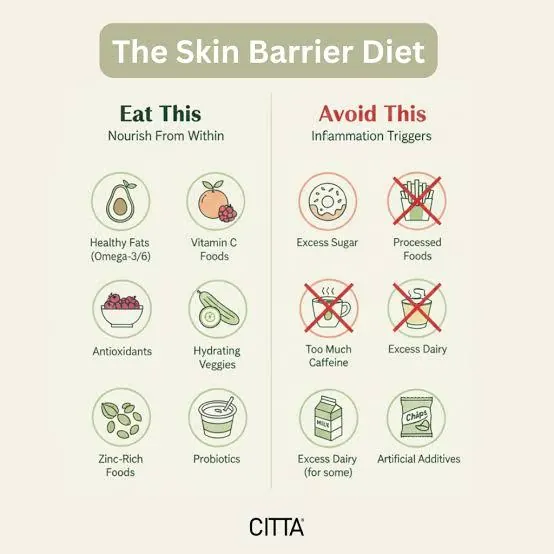
High glycemic foods will induce inflammation that will trigger melanocytes to produce melanin.
The Fix: Eat an anti-inflammatory, antioxidant-rich diet. Focus on colorful berries, dark leafy greens, omega-3 fatty acids (salmon, walnuts, flaxseeds), and green tea (rich in EGCG) to neutralize free radicals before they can activate melanin production.
References:
- Regazzetti, C., et al. (2014). Melanocytes Sense Blue Light and Produce Pigmentation through Opsin-3. Journal of Investigative Dermatology, 134(10), 2588–2597.
- Mahmoud, B. H., et al. (2010). Impact of Long-Wavelength UVA and Visible Light on Melanocompetent Skin. Journal of Investigative Dermatology, 130(8), 2092–2097.
- Cho, S., et al. (2009). Acute Effects of Infrared Radiation and Heat on Human Skin in Vivo. Journal of Investigative Dermatology Symposium Proceedings, 14(1), 15–19.
- Slominski, A. T., et al. (2004). Melanin Pigmentation in Mammalian Skin and Its Hormonal Regulation. Physiological Reviews, 84(4), 1155–1228.
- Kim, A. J., et al. (2013). Stress-Induced Cortisol Releases Melanocyte-Stimulating Hormone and Activates Tyrosinase. Experimental Dermatology, 22(12), 801–805.
- Oyetana, M., et al. (2015). Impact of Bad Sleep Quality on Skin Aging and Barrier Function. Clinical and Experimental Dermatology, 40(1), 17–22.
- Saric, S., & Sivamani, R. K. (2016). Polyphenols and Sunburn/Photoprotection: A Review. Nutrients, 8(3), 152.
- Nguyen, H. P., & Katta, R. (2015). Sugar Sag: Glycation and the Skin. Skin Therapy Letter, 20(6), 1–5.


