
Honey, known as Madhu in Ayurveda, is revered as one of the most unique and powerful natural substances. Unlike other sweet substances, honey is considered Yogavahi a catalyst that carries the properties of herbs deep into the tissues. Classical Ayurvedic texts such as Charaka Samhita, Sushruta Samhita, and Ashtanga Hridaya extensively describe honey’s therapeutic value, properties, and strict rules for its use. When used correctly, Madhu supports health and healing, when misused, it can become harmful.
This blog explores the Ayurvedic properties, therapeutic uses, and the right way to use honey according to Ayurveda.
1. Ayurvedic Properties of Honey (Madhu): Rasa, Guna & Dosha
Ayurveda explains any substance based on Rasa (taste), Guna (qualities), Virya (potency), and Vipaka (post-digestive effect)
Rasa (Taste)
- Madhura (sweet)
- Kashaya (astringent – secondary taste)
This combination makes honey nourishing yet drying, a rare dual property.
Guna (Qualities)
- Laghu (light)
- Ruksha (dry)
- Vishada (clear, non-slimy)
Because of these qualities, honey helps reduce excess fat, mucus, and toxins.
Virya (Potency)
- Sheeta Virya (cooling)
Despite being sweet, honey does not aggravate Kapha when used appropriately
Vipaka (Post-digestive effect)
- Madhura Vipaka
Dosha Action
- Pacifies Kapha
- Balances Pitta (when used in moderation)
- May aggravate Vata if overused or used incorrectly.
Thus, honey is especially beneficial in Kapha-related disorders such as obesity, diabetes (Prameha), cough, asthma, and high cholesterol.
2. Therapeutic Uses of Honey in Ayurvedic Practice

Ayurveda uses honey both as medicine and Anupana (vehicle).
1. Digestive & Metabolic Health
- Improves Agni (digestive fire) when used in small quantities
- Useful in Ama-related conditions
- Supports weight management due to its fat-scraping (Lekhana) property
2. Respiratory Disorders
- Effective in Kasa (cough), Shwasa (asthma), and bronchitis
- Combined with ginger, black pepper, or long pepper for enhanced effect
- Acts as a natural expectorant
3. Diabetes & Metabolic Syndrome
- Used cautiously in Prameha (diabetes) due to its Kapha-reducing and scraping action
- Preferably combined with herbs like turmeric or cinnamon under medical guidance
4. Wound Healing & Skin Health
- Applied externally for wounds, ulcers, and burns
- Possesses antibacterial and healing properties
- Promotes tissue regeneration
5. As a Yogavahi (Carrier Substance)
- Enhances absorption of herbal medicines
- Directs herbs to deeper tissues (Dhatus)
3. Right Way to Use Honey According to Ayurveda
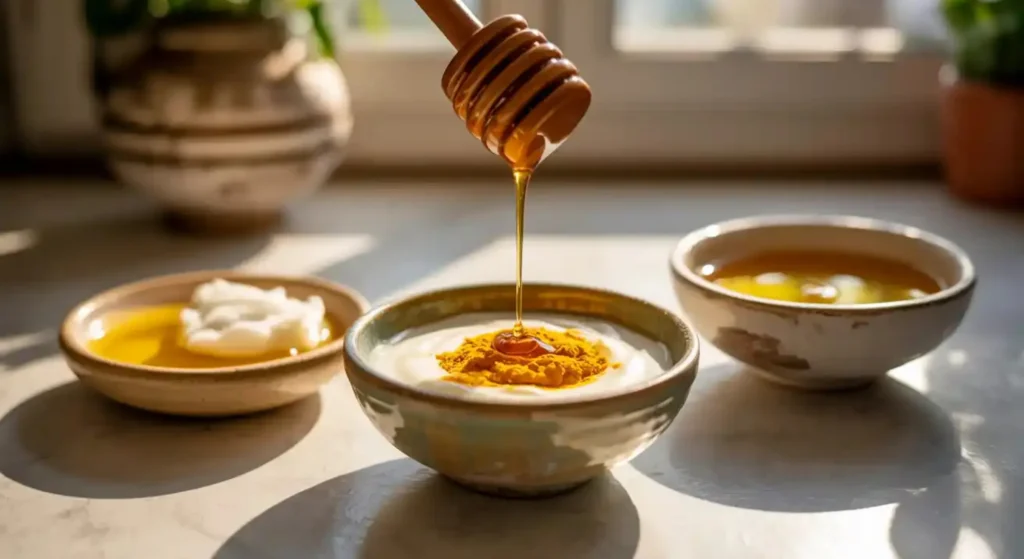
Ayurveda strongly emphasizes proper usage (Samyoga & Matra) of honey
Golden Rules of Honey Consumption
1. Never heat honey
- Heated honey (Ushna Madhu) becomes toxic (Ama Visha)
- Mixing honey with hot water, milk, or tea is strictly contraindicated
2. Do not mix honey and ghee in equal quantities
- This combination is considered Viruddha Ahara (incompatible food)
3. Best time to consume honey
- Morning, on an empty stomach or before meals
- Useful for metabolism and Kapha balance
4. Quantity matters
- Always consume in small amounts
- Excess intake can aggravate Vata and cause dryness
5. Best combinations
- Honey + turmeric (immune support)
- Honey + ginger juice (cough & digestion)
- Honey + Triphala (detoxification)
6. Not ideal for infants
- Ayurveda advises caution in children below one year
4. Conclusion
Honey (Madhu) is not just a natural sweetener in Ayurveda,it is a potent medicinal substance with unique properties. Its ability to nourish while reducing excess Kapha makes it truly exceptional. However, Ayurveda clearly states that honey must be used wisely, in the right quantity, at the right time, and in the right combinations.
Incorrect practices,such as heating honey or excessive consumption,can negate its benefits and even lead to toxicity. When used correctly under Ayurvedic principles, honey supports digestion, immunity, respiratory health, metabolism, and overall well-being.
Thus, Madhu stands as a perfect example of Ayurveda’s holistic wisdom: food itself becomes medicine when used with awareness.
References
- Sharma RK, Dash B, editors. Charaka Samhita of Agnivesha. Reprint ed. Varanasi: Chaukhambha Sanskrit Series Office; 2018. Sutrasthana.
- Sharma PV, editor. Sushruta Samhita. Reprint ed. Varanasi: Chaukhambha Visvabharati; 2019.
- Murthy KRS, editor. Ashtanga Hridaya of Vagbhata. 9th ed. Varanasi: Chaukhambha Krishnadas Academy; 2017. Sutrasthana.
- Chunekar KC, editor. Bhavaprakasha Nighantu of Bhavamishra. Reprint ed. Varanasi: Chaukhambha Bharati Academy; 2016.
- Ministry of AYUSH, Government of India. The Ayurvedic Pharmacopoeia of India.Part I, Vol. I. New Delhi: Ministry of Health and Family Welfare; 2015


